
Offset Smoker vs Pellet Smoker
A pellet grill vs offset smoker choice is simple: the offset gives the deepest wood smoke and the most room, but it needs tending. The pellet smoker is easy to live with.
Set the temperature and it holds heat. Pick the offset if you love real wood fire and cook for a crowd. Pick the pellet smoker if you want barbecue with less work.
A pellet smoker burns wood pellets in a firepot. An auger feeds them, and a controller holds the heat. You get wood smoke flavor with the ease of a dial.
As an Amazon Associate, JuicyBurn earns from qualifying purchases made through links on this page, at no extra cost to you.
JuicyBurn has not cooked on these cookers side by side. This comparison is built from manufacturer specifications, Amazon listing details, and what owners say in reviews, forums and roundups. We do not claim test results we do not have, and we do not print star ratings or review counts. Last updated November 28, 2026.
The offset wins on smoke flavor and space. The pellet smoker wins on ease. For most backyards, start with the Highland if you love tending a fire, or the Weber Searwood XL 600 if you want great barbecue with less work.
Offset Smoker vs Pellet Smoker at a Glance
| Offset smoker | Pellet smoker | |
|---|---|---|
| How it makes heat | Charcoal and wood splits burning in a side firebox | Wood pellets burned in a firepot, fed by an auger |
| How it makes smoke | Whole wood splits, real wood fire | The pellets themselves, real wood smoke |
| Flavor | Deepest wood smoke, the benchmark | Clean, lighter wood smoke; milder, fainter at high heat (reviewer consensus) |
| Temperature range | Low and slow, around 225 degrees F; searing on the firebox grate only | 180 to 600 degrees F (Weber), 180 to 500 degrees F (Pit Boss); direct-flame searing to 1,000 degrees F on the Pit Boss only |
| Ease of use | Needs you there through the cook, feeding the fire and working the dampers | Set the temperature and it holds; more parts to own and clean |
| Temperature control | Two dampers and fire management; owners learn it over time | Digital/PID controller; steady, but wind and pellet quality affect it |
| Cooking area (our picks) | 879-1,060 sq in | 518-972 sq in |
| Fuel use | Charcoal and wood splits; cheaper if you have local hardwood | Wood pellets by the bag; a long cook uses several pounds |
| Needs electricity? | No | Yes, auger, fan and controller |
| What you need to run it | Charcoal, wood splits, a chimney starter | An outdoor outlet plus dry pellet storage |
| Cleaning | Empty the ash pan and clean the grates; ash holds moisture, so clean it out after every cook | Empty the ash cup and firepot; clean the grease system |
| Best for | Big cooks, pure smoke flavor, learning real fire management | Easy weeknight cooks, overnight briskets, one cooker that smokes and grills |
| Weakest point | Leaks smoke and heat out of the box; needs sealing and mods | Mild smoke flavor; needs power and dry pellets |
Which Tastes Better: Offset or Pellet?
Short answer: the offset, by a clear margin for pure smoke flavor. A pellet smoker gives clean, lighter smoke that is very good, but milder.
Flavor is where the two types genuinely differ, and the main reason to choose an offset. An offset burns whole wood splits with plenty of oxygen, so the smoke is deep and the bark is assertive. That is the benchmark every other smoker is judged against. A pellet smoker burns compressed hardwood pellets, the same kind of wood smoke in smaller, steadier doses. It is very good, but it is not as deep as a stick burner.
Do pellet smokers taste as good as wood smokers? Not as deep as a stick burner. The smoke is clean and lighter, and reviewers agree it gets fainter at high heat. For most family cooks the difference is small, and owners of the Weber say a smoke tube helps. For pure smoke flavor, the offset still wins.
One caveat: a badly run offset tastes worse than a well-run pellet smoker. Dirty smoke from a choked fire leaves bitter food, while a pellet smoker holds a clean burn on its own. The offset wins on flavor only when you run it well.
Which Is Easier to Use?
Short answer: the pellet smoker, by a mile. Set the temperature and it holds; the offset needs you there through the cook.
A pellet smoker is the closest thing to set-and-forget barbecue. Set a temperature and the auger and fan do the rest, so you can run a brisket through the night without waking up to feed a fire. The extra work is around the cook, not during it. Keep pellets dry, because wet pellets swell, jam the auger, and can ruin a cook. Empty the ash and clean the grease system, and remember it has more parts that can fail: auger motor, fan, and igniter.
An offset needs you there through the cook, feeding the fire and working the dampers, and it takes a while to come up to temperature. Temperature control comes from the two dampers and from how you build and feed the fire, so there is a learning curve on first cooks. Once sealed and learned, owners say it holds temperature well and the flavor is worth the work. It asks for your attention on every cook, and it needs no electricity, no app, and no WiFi setup.
How Much Does Each Cost to Run?
Short answer: the offset is cheaper to run if you have local hardwood. The pellet smoker costs more per cook, and the gap grows on long cooks.
A pellet smoker burns bagged pellets as its only fuel, and a long cook eats several pounds, more in cold or windy weather. The Weber’s 20 lb hopper holds a full bag, so it runs a long cook without a refill. The Pit Boss’s 5 lb hopper needs refills on long cooks: owners say set an alarm for an overnight brisket. You also need somewhere dry to store pellets, because a damp bag can ruin a cook.
An offset burns splits and charcoal, which is cheaper if you have local hardwood. The trade-off is how much fuel it eats: the Highland’s thinner steel loses heat faster in cold or windy weather, so owners say it needs more fuel and more attention to hold steady temperatures. Pellet smokers also cost more up front for the same cooking area, because you are paying for the auger, the fan, the controller, and the firepot. Buy a pellet smoker for the ease and the grilling ability, not to save money.
How Hot Do They Get, and Why It Matters
Short answer: the pellet smoker reaches higher and sears. The offset is a low-and-slow cooker, and it sears only on the firebox grate.
The Weber runs from 180 to 600 degrees F with DirectFlame across the grates. The Pit Boss runs from 180 to 500 degrees F, and its Flame Broiler lever opens direct flame for searing up to 1,000 degrees F. That range decides what the cooker can do: at 600 degrees, or over direct flame, a pellet smoker is a grill as well as a smoker.
The offset is built for low and slow, around 225 degrees F. Searing happens on the firebox grate only: the Highland’s 263 square inch firebox grate doubles as a small grill, so you can sear wings or burgers while the main chamber smokes. If you already own a gas or charcoal grill, this gap may not matter, because your grill does the searing. If you want one cooker to do both jobs, it matters more than any other difference here, including flavor.
How Much Food Can You Cook on Each?
Short answer: the gap is small at the top end now. The Weber has more room than the Highland; the Longhorn is the biggest cooker here and the Pit Boss the smallest.
The Weber gives you 972 square inches across two racks, more than the Highland’s 879. The Longhorn Reverse Flow gives you 1,060 square inches, the most here. The Pit Boss gives you 518 square inches across two tiers, the least. A full packer brisket fits each of the four picks. The gap is sides and a second brisket, not one brisket.
The Longhorn holds multiple briskets at once, according to owners, and the Pit Boss cooks a brisket and sides at once on its two tiers. Two cautions. First, square inches are not all equal: the Weber’s 972 is across two racks, so measure the racks against the food you cook, because a full packer needs a flat grate. Second, do not over-buy: a huge cooker run half-empty uses more fuel and smokes less consistently than a right-sized one.
Is a Pellet Grill the Same as a Pellet Smoker?
Short answer: yes. ‘Pellet grill’ and ‘pellet smoker’ describe the same cooker.
A pellet grill is a pellet smoker: a cooker that burns wood pellets, with a digital controller, that smokes low and grills high. ‘Grill’ emphasises the high-temperature end of its range; ‘smoker’ the low end. That is why this article uses both terms. The searches ‘pellet grill vs offset smoker’ and ‘offset smoker vs pellet smoker’ are the same match-up: a versatile wood-fired cooker against a live-fire offset.
An offset smoker, by contrast, is a different kind of cooker entirely: a stick burner with a side firebox, no auger, no controller, and no electricity. The question is not which name is right. It is whether you want a cooker that does the work for you, or a fire you manage by hand.
Representative Picks: Offset Smokers
Representative examples of each type, listed on Amazon, not a tested ranking. We have not hands-on tested them side by side.
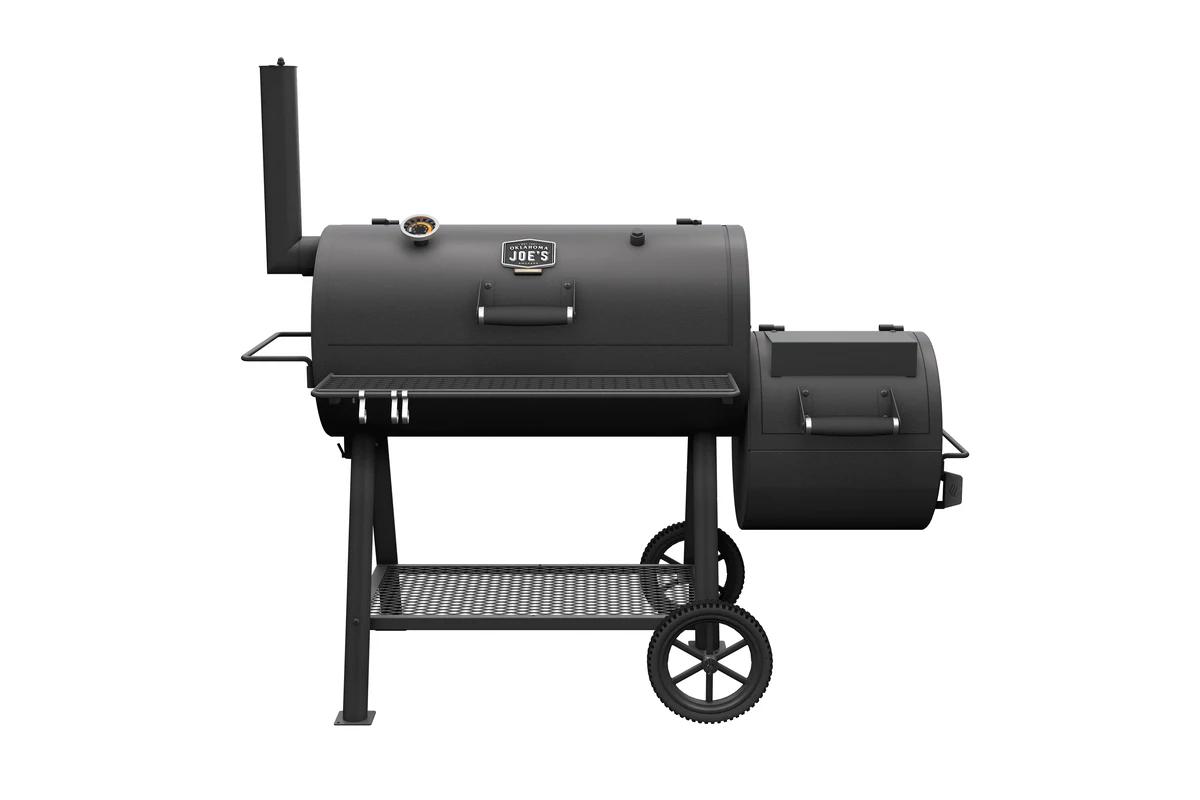
Oklahoma Joe’s Highland Offset Smoker (24203001)
The best first offset, and the best overall pick in our best budget offset smokers guide. It is a true horizontal offset with 879 square inches in total, 616 on the main grate and 263 on the firebox grate, and it weighs 156 lb. A full brisket fits flat on the main grate.
Owners say it leaks smoke and heat out of the box, the factory thermometer reads 25 to 50 degrees off, and the firebox paint peels. A gasket kit and a grate probe fix the worst of it, and the Highland has the biggest mod community of any budget offset. See our best offset smoker mods guide. Assembly takes about 2 hours, faster with help.
Buy it if you want to learn real fire management. Skip it if you want set-and-forget cooking.
Oklahoma Joe’s Longhorn Reverse Flow Smoker (17202053)
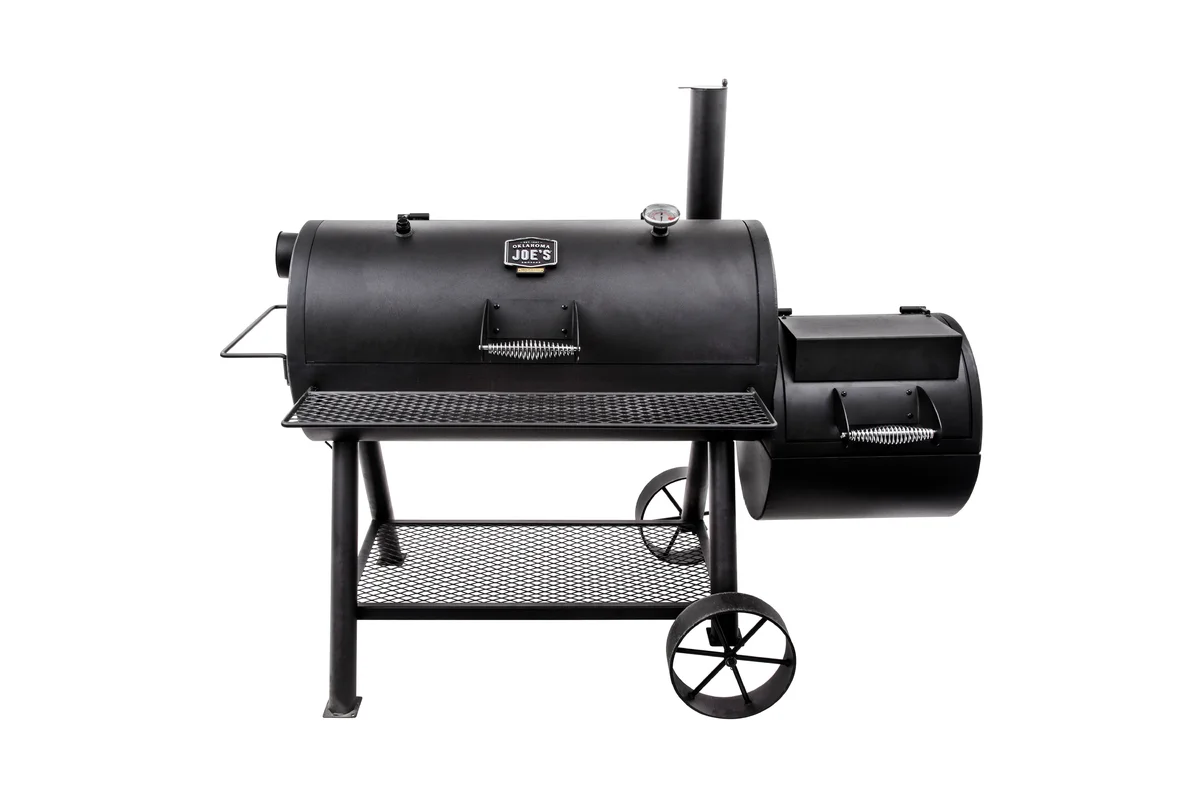
The best overall offset in our flagship guide, and the biggest cooker in this comparison. It gives you 1,060 square inches in total, 751 on the main grate and 309 on the secondary grate, and it weighs 268.3 lb. Four removable baffle plates spread the heat across the chamber, and you can move the baffles and the smokestack to switch it back to a traditional offset. Oklahoma Joe’s gives a 2-year warranty.
Owners say it holds multiple briskets at once, and the baffles mean the far end of the grate cooks close to the firebox end. The trade-off is size and weight. It needs help to move and a large patio, and it needs sealing: owners report gaps at the firebox and the cooking chamber door. Paint can peel on the firebox, the most common complaint, though it does not affect cooking.
Buy it if you cook for a crowd and want the most space and even heat. Skip it if you cook for two or have a small patio.
Representative Picks: Pellet Smokers
Representative examples of each type, listed on Amazon, not a tested ranking. We have not hands-on tested them side by side. The Traeger Pro 575 held the lead pellet spot in our earlier guide, but it is phased out and out of stock on Amazon, which is why the Weber leads the pellet side here.
Weber Searwood XL 600 (1500121)
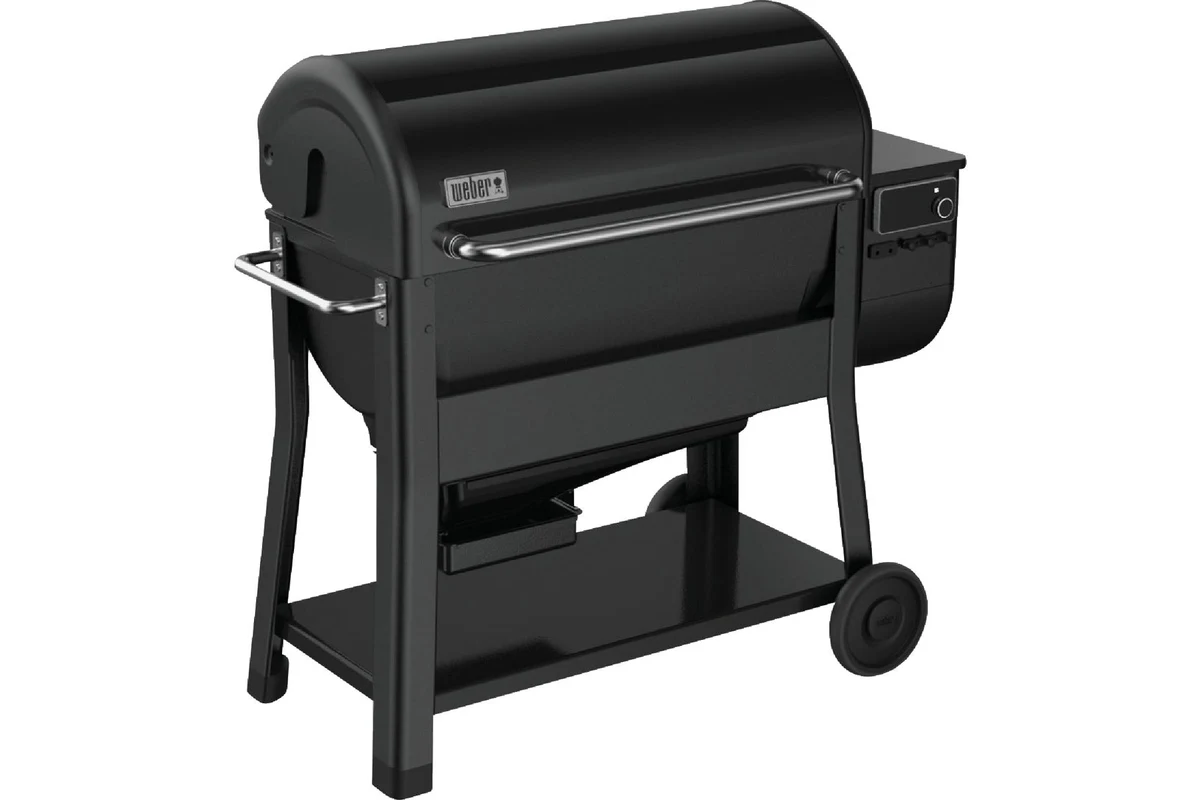
The lead pellet pick, and the best for searing in our best pellet smokers guide. It gives you 972 square inches across two racks, runs from 180 to 600 degrees F, and holds a full bag of pellets in its 20 lb hopper. DirectFlame, a Rapid React PID controller, SmokeBoost, and Weber Connect WiFi and Bluetooth come standard, with two food probes included. It weighs 158 lb, and Weber gives a 5-year warranty. This is the XL 600, model 1500121; the smaller Searwood 600 gives you 648 square inches, so check the model before you buy.
Searing splits owners. Some praise it, while others say it is not a true sear: owners report thin steaks getting weak marks, and a griddle reading 520 to 550 degrees when the grill is set to 600. A smoke tube helps with flavor. Reviewers report an E18 temperature drop error, a faulty probe, a bent bottom shelf, and weak WiFi reception. Assembly takes about an hour and a half and needs two people, with a rough cut noted on the fire pot.
Buy the Searwood XL 600 if you want one grill that smokes low and slow and sears hot. Skip it if searing is your top priority and you want a dedicated sear station.
Pit Boss 500FB2 (11086)
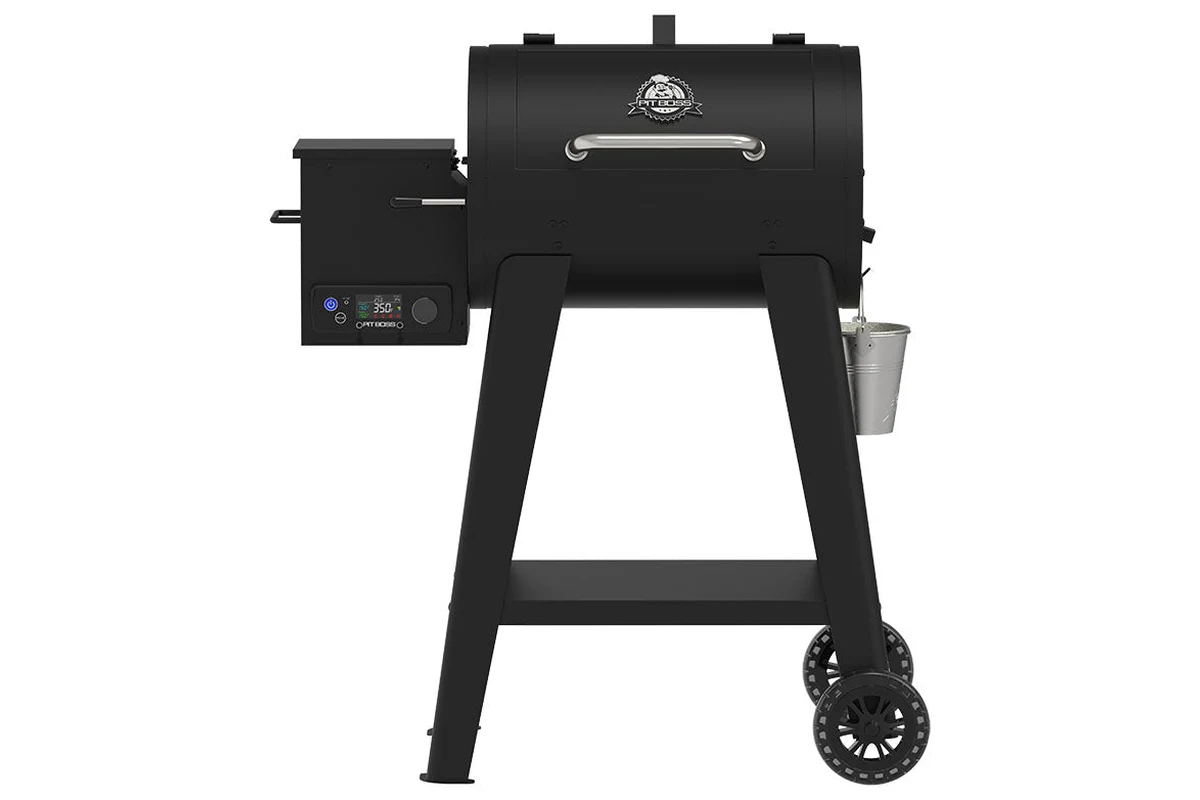
The value pellet pick. It gives you 518 square inches across two tiers for a low price. It runs from 180 to 500 degrees on a dial-in digital controller, and the Flame Broiler lever opens the flame for direct searing up to 1,000 degrees. You get one meat probe and two probe ports, a bottom shelf, and a solid alloy steel body. At 136.6 lb it is a permanent patio fixture, not a grill you move around. Pit Boss gives a 5-year warranty.
The trade-off is the 5 lb hopper. Owners say you will refill it on long cooks, so set an alarm for an overnight brisket. Temperature stability splits owners: some say it holds within 5 degrees, while others report inconsistent readings. Assembly also splits owners, some finding it easy and others fiddly. The bottom ash clean-out tray is awkward to remove. One reviewer who judges BBQ contests advises checking the firepot welds when the grill arrives.
Buy the 500FB2 if you want the most grill for the money and you like the idea of direct-flame searing. Skip it if you cook long briskets often and do not want to refill pellets.
Two Comparisons That Belong Elsewhere (Brief Notes)
Three more comparisons belong elsewhere, so brief notes only.
Offset smoker vs kamado grill. A kamado is a thick-walled egg cooker that holds heat for a very long time and can smoke low and sear extremely hot; an offset is a stick-burner built for long, smoky cooks with real fire management. The kamado is the versatile all-rounder, the offset the purist’s smoker. See our offset smoker vs kamado grill comparison.
Electric smoker vs pellet smoker. An electric smoker is the easiest and cheapest way to smoke, while a pellet smoker costs more and needs more upkeep but tastes closer to real wood fire and can also grill. See our electric smoker vs pellet smoker comparison.
Offset smoker vs charcoal smoker. The Weber Smokey Mountain is a bullet smoker, not an offset or a pellet cooker: a vertical charcoal smoker that is small, simple and very good at low and slow. See our best charcoal smokers guide.
The Verdict: Which Should You Buy?
Buy the offset if: you cook for a crowd, you want the best smoke flavor, and you enjoy tending a fire. Start with the Highland, or the Longhorn Reverse Flow for the most space and even heat.
Buy the pellet smoker if: you want steady, easy barbecue and overnight cooks without waking up, and you want one cooker that smokes and grills. Start with the Searwood XL 600, or the 500FB2 if budget is tight and you want direct-flame searing.
Do NOT buy an offset if: you want set-and-forget cooking, you cook for two, or you have a small patio.
Do NOT buy a pellet smoker if: you want the purest wood-fired flavor, or you have nowhere dry to store pellets and no outdoor outlet.
The pellet grill vs offset smoker choice is not about which cooker is better. It is about which kind of cooking you enjoy. If you love tending a fire and cooking for a crowd, buy the offset. If you want one cooker that does it all with less work, buy the pellet smoker. To compare pellet cookers first, read our best pellet smokers guide. If you are new to offsets, start with our best offset smokers for beginners guide.
Frequently Asked Questions
Is a pellet smoker better than an offset smoker?
No. They are different tools. The offset wins on flavor and space. The pellet smoker wins on ease and versatility. Do pellet smokers taste as good as wood smokers? Not as deep as a stick burner: the smoke is clean and lighter, and it gets fainter at high heat. For most family cooks the difference is small. For pure smoke flavor, the offset wins.
Can a pellet smoker replace an offset smoker?
For family cooks, yes. A pellet smoker smokes, grills, roasts and sears on one cooker. For big brisket cooks and pure smoke flavor, no. The downsides of a pellet grill are the ones in this guide: it needs power, it burns bagged pellets, and the smoke is milder than a stick burner’s. It also has more parts that can fail.
Can you sear on a pellet smoker?
Yes. The Weber reaches 600 degrees with DirectFlame across the grates, though searing splits owners, and the Pit Boss opens direct flame for searing to 1,000 degrees with the Flame Broiler. Are steaks good on a pellet grill? On the Pit Boss, yes, over direct flame. On the Weber, steaks sear, but owners report thin steaks get weak marks.
Do pellet smokers need electricity?
Yes. The auger, the fan and the controller all run on power. No outlet means no pellet cook. An offset smoker needs none of that: charcoal, wood splits and a chimney starter are all it takes.
Which smoker is best for a beginner?
A pellet smoker is easier to learn: set the temperature and it holds, and it forgives a new cook. An offset rewards patience and teaches real fire management, but it asks for tending on every cook. If you want to learn fire, start with the Highland. If you want easy first cooks, start with a pellet smoker. Our best offset smokers for beginners guide walks through the choice.
